Clos Pegase Winery in Calistoga, Napa Valley
Interview with Robin Akhurst, Director of Winemaking
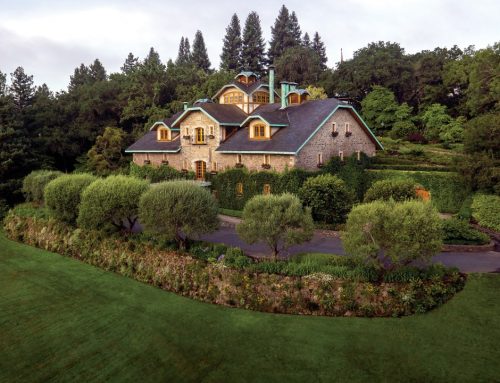
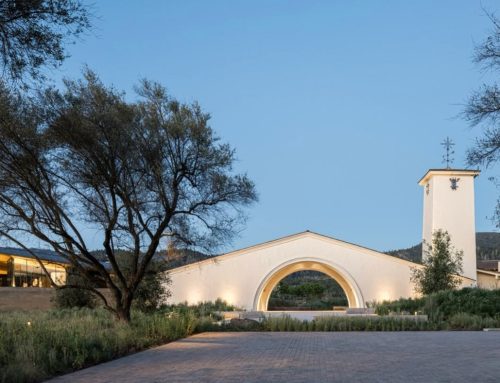
Clos Pegase Winery brings together wine, architecture and art. Founded in 1984 and designed by Michael Graves, Clos Pegase is a landmark Napa Valley winery and cultural destination in Calistoga. Acquired by Adair Family Wines in 2024, the estate continues its legacy as a monument to wine, art, and architecture. We interview Robin Akhurst, Director of Winemaking to learn more.
What type of wine do you specialize in?
Robin Akhurst, Director of Winemaking: Cabernet Sauvignon is an important part of Clos Pegase and of my work in Napa Valley, but my background has exposed me to a broad range of varieties and wine styles, so I’ve never really considered myself a specialist in just one grape. At Clos Pegase we also work with Chardonnay, Pinot Noir, Sauvignon Blanc and a number of other varieties.
I enjoy moving between different varieties and styles because each asks something different of you as a winemaker. It keeps you curious and prevents winemaking from becoming formulaic. Whatever the variety, I’m generally looking for balance, freshness, texture and a clear expression of where the grapes were grown.

What makes your wine unique?
Robin Akhurst, Director of Winemaking: For me, it comes back to the vineyards. I’ve been fortunate to make wine in Burgundy, Marlborough, Barossa, Languedoc, Napa Valley and Sonoma County, and one lesson that has stayed with me is that great wines have a sense of place.
At Clos Pegase, our job in the winery is to preserve what makes the vineyards distinctive rather than impose a formula on them. That means making decisions lot by lot and vineyard by vineyard, and adapting to what each vintage gives us. I want the wines to have polish and generosity, but also freshness, balance and personality. Ultimately, I hope someone drinking a Clos Pegase wine experiences something that couldn’t simply have been made anywhere else.

Share a popular tasting experience.
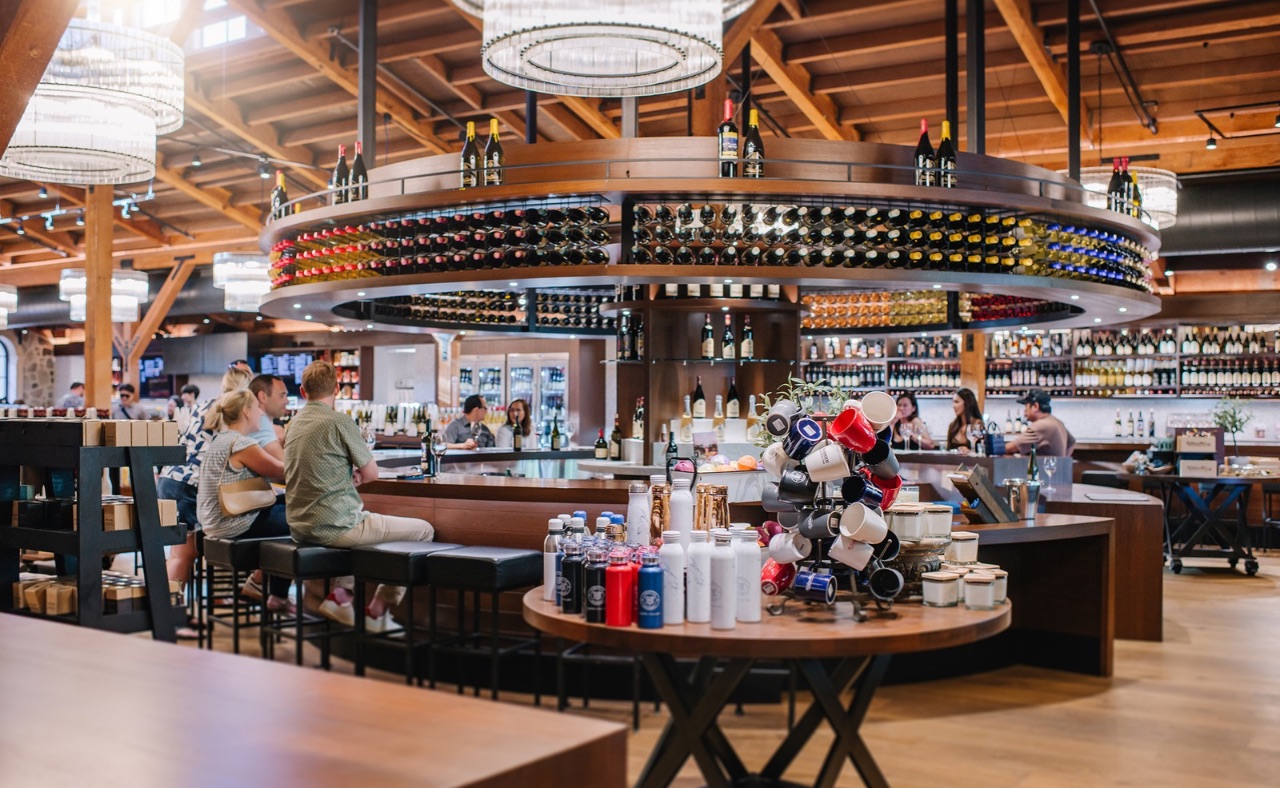
Robin Akhurst, Director of Winemaking: One of the things I love about visiting Clos Pegase is that the winery itself becomes part of the tasting experience. Guests are surrounded by striking architecture and art, and then have the opportunity to explore the winery and caves while tasting wines from the estate. From a winemaker’s perspective, I particularly enjoy when guests can connect what is in their glass with where and how the wine was made.
Walking through the caves, seeing barrels aging and then tasting the finished wines gives people a much deeper understanding of the process. It takes wine from being something abstract in a bottle and connects it to the vineyard, the cellar and the people behind it.

What’s one thing you wish more people knew about your winery?
Robin Akhurst, Director of Winemaking: I think people sometimes first associate Clos Pegase with its architecture and art, which are obviously an important part of the property, but there is also a very serious winemaking and vineyard story behind it. We have a team that is incredibly focused on quality and on understanding each vineyard and individual lot. A great deal of work happens behind the scenes before a wine ever reaches the tasting room.
Vineyard, cellar, laboratory, production and hospitality teams are all contributing to that final bottle. The beauty of the property may be what first catches your attention, but I hope the quality and personality of the wines are what stay with you.

How did you get started in the wine industry?
Robin Akhurst, Director of Winemaking: My route into winemaking was a little unconventional. I started in hospitality and worked as a sommelier before joining one of London’s leading fine-wine merchants. I loved tasting and learning about the great wine regions of the world, but eventually I realized I didn’t just want to sell and talk about wine—I wanted to understand how it was made. That led me to Lincoln University in New Zealand to study Viticulture and Enology, and from there I worked in regions including Marlborough, Barossa, Burgundy and Languedoc before eventually arriving in Napa Valley in 2009.
Along the way I’ve been fortunate to work with and learn from some exceptional winemakers, including Thomas Rivers Brown, Mike Smith, Chris Phelps, Marco Di Giulio and Françoise Peschon. All of those experiences have contributed something to the way I make wine today.

What’s the biggest lesson you’ve learned in the winemaking process?
Robin Akhurst, Director of Winemaking: Probably that you can’t force wine to follow a recipe. Every vintage gives you something different, and some of the best decisions you make are simply knowing when not to interfere. Experience gives you more tools, but it also teaches you restraint. My philosophy has increasingly become that exceptional wines begin in the vineyard and are guided, rather than made, in the winery. You have to pay attention to what the vineyard and the vintage are giving you and be willing to adapt. That uncertainty is one of the things that keeps winemaking interesting.

Do you remember the first time you fell in love with wine?
Robin Akhurst, Director of Winemaking: I don’t know that there was one bottle or one moment when it happened. It was more of a gradual realization while I was working in restaurants and then in the fine-wine trade in London. Wine had this fascinating ability to combine geography, history, agriculture, science, food and people in a single bottle. The more I learned, the more questions I had. Eventually that curiosity became strong enough that I left the commercial side of the industry to study viticulture and enology and learn how to make wine myself.
More than twenty years later, I still feel like I’m learning, which is probably what keeps me fascinated by it.

Describe your winemaking approach.
Robin Akhurst, Director of Winemaking: My philosophy is fairly simple: great wine begins in the vineyard, and our job in the winery is to guide it rather than manufacture it. I like precision in winemaking, but I don’t believe precision has to mean uniformity. Every vineyard, variety and vintage asks something slightly different of you. I want our wines to have balance, freshness and longevity, but most importantly they should retain their identity.
Having worked in very different wine regions around the world has probably made me less dogmatic about technique. There are many ways to make great wine; the important thing is understanding why you’re making each decision.

Do you have a favorite story about working at your winery?
Robin Akhurst, Director of Winemaking: One of my favorite things about harvest is seeing how the entire company rallies around the team. Harvest involves long days and a tremendous amount of physical work, and people from completely different departments take the time to come out and cook for the crew. We’ve had members of our finance team come in and prepare a meal, and our IT team will smoke a brisket and bring it in for everyone. Those moments mean a lot because they remind you that producing wine really is a company-wide effort, even though much of the work happens behind the scenes.
We also have a tradition at the beginning of harvest where our President and owner, Tammi Adair, comes to the winery to bless the grapes. We open some Champagne, gather the team together and wish each other luck for the vintage ahead. Harvest is always unpredictable, so having that moment together before everything gets busy is a great way to start the season.

What do you love about winemaking?
Robin Akhurst, Director of Winemaking: I love that winemaking sits somewhere between science and creativity. There’s a tremendous amount of chemistry, microbiology and technical decision-making involved, but ultimately you’re using all of that knowledge to create something that people experience emotionally. Blending is probably my favorite example of that. You can have several individual lots that are very good on their own, but occasionally you find a combination where the finished wine becomes greater than any of its individual components. There’s something incredibly satisfying about that process. And then you get to start again every vintage and try to do it a little better.

How does your team help you as a winemaker?
Robin Akhurst, Director of Winemaking: Winemaking is absolutely a team effort, and Clos Pegase is a great example of that. I rely heavily on our winemaking, cellar and vineyard teams because they are constantly observing what is happening with the fruit and the wines.
Great winemaking involves thousands of small decisions, and no single person can see everything. I also really value the perspective of our hospitality, sales and marketing teams because they spend so much time interacting directly with the people who ultimately drink our wines. During harvest, you really see that collaboration extend across the entire company, whether someone is helping with logistics or simply bringing lunch to a cellar crew that has been working since early morning. The best wines are almost always the product of strong teams rather than individual winemakers.

How has making wine around the world influenced the way you make wine in California?
Robin Akhurst, Director of Winemaking: Working in different wine regions taught me that there is no single blueprint for making great wine. Burgundy taught me a tremendous amount about site and the importance of allowing small differences in vineyards to express themselves. New Zealand, Australia and southern France exposed me to very different climates, varieties and approaches to winemaking.
When I arrived in Napa Valley in 2009, I brought those experiences with me, but I also had to learn California on its own terms. Today I probably borrow little pieces from everywhere I’ve worked, but the goal isn’t to make a California wine taste Burgundian or European. It’s to use everything I’ve learned to better express the vineyards we have here.