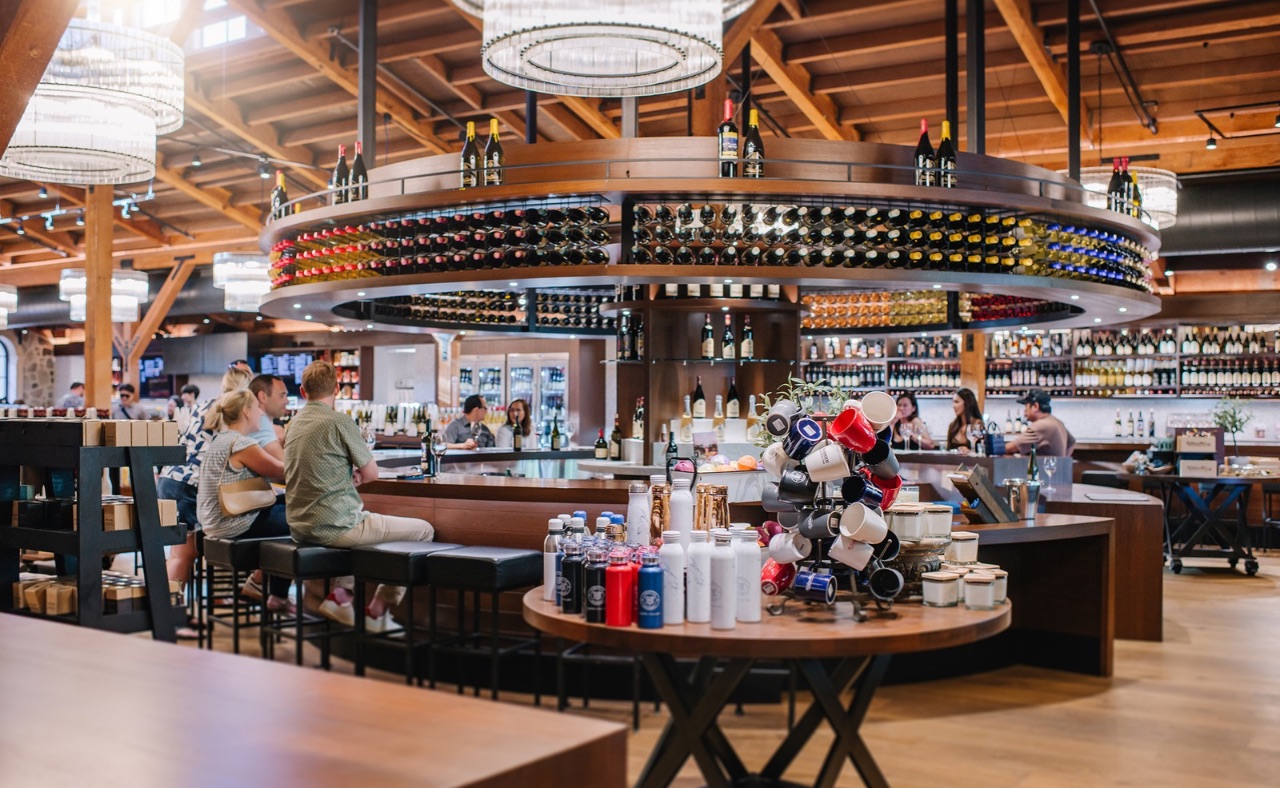
Davis Estates in Calistoga, Napa Valley
Interview with Winemaker, Walter Leiva.
Davis Estates is located in Calistoga at the northern end of Napa Valley, where the estate vineyard and winery were thoughtfully developed with a focus on both quality and guest experience. From the start, the goal has always been to create something that feels complete, not just in the wines, but in how everything comes together.
The experience, the setting, and the hospitality all play a pivotal role in how the wines are understood and enjoyed. When everything is aligned, it creates something that feels cohesive, and that’s what they’re always working toward. We interview Davis Estates Winemaker, Walter Leiva to learn more.
What type of wine do you specialize in?
Davis Estates Winemaker Walter Leiva: At our core, we specialize in Cabernet Sauvignon; that’s the backbone of what we do and where we focus most of our attention. Napa Valley is naturally suited for Cabernet, and it gives us the structure, depth, and age-worthiness we’re looking for.
Cabernet Franc is also a big part of our program and something we’re particularly excited about. It brings a different dimension with more lift, aromatics, and freshness, and in the right sites, it can be just as compelling on its own, as it is in a blend.
We also work with other Bordeaux varietals like Merlot, Malbec, and Petit Verdot, which round things out and play an important role depending on the vintage and the lot.
On the white side, we produce Chardonnay and Sauvignon Blanc as well, with the same focus on precision and intentionality.
In the end, Cabernet is still king for us; it’s where we spend the most time and where we feel we can best express both the vineyard and our overall approach to winemaking.

What makes your wine unique?
Winemaker Walter Leiva: For me, it comes down to restraint and site expression. Napa can naturally push towards power and ripeness, but we aggressively target a sense of balance, while also aiming for the vineyard to always show through.
That mindset carries through everything we do, starting in the vineyard, working with the right sites, the right blocks, the right clones, and making farming decisions that set us up for success. In the cellar, we take a relatively minimal intervention approach, making adjustments where needed, intervening only when necessary, and not forcing the wine into a particular style.

We’re constantly asking ourselves whether the wine feels complete, not just whether it’s big or impressive. Texture, flow, aromatics, and how the wine evolves in the glass have become somewhat of an obsession for us.
At the end of the day, the goal is to make wines that are expressive, balanced, and true to the site. Wines with tremendous aging potential, yet also enjoyable early on. That’s the line we’re always trying to walk.
Share a popular tasting experience.
Winemaker Walter Leiva: A popular tasting experience we offer is an AVA-focused tasting that highlights different sub-appellations within Napa Valley, and how they express themselves in the glass. It’s built around the idea that where the fruit comes from matters just as much as how the wine is made.

We guide guests through a progression of Cabernet Sauvignon wines sourced from different AVAs – Calistoga, Howell Mountain, Rutherford, and Oakville – showcasing the important role that soil, climate, and location play in shaping structure, aromatics, and overall style. It becomes a side-by-side comparison that helps our guests clearly see and taste those differences.
Every visit to Davis Estates is seated, privately hosted, and includes food pairings. For our AVA Exploration, the experience is accompanied by an entrée-style food pairing, designed to complement the wines and highlight how they interact with different flavors and textures. With two full-time chefs, food pairings play a very meaningful role in how we present our wines, and they add another layer to the overall experience.

We try to keep the tasting approachable rather than overly technical. It ends up being more of a conversation than a presentation, where guests can connect what they’re tasting back to place.
It’s a great way to show that Napa isn’t just one style of wine. There’s a lot of diversity here, and this experience helps bring that to life in a tangible way.
What’s one thing you wish more people knew about your winery?
Winemaker Walter Leiva: People are often surprised by how elevated the whole experience is here, yet it never feels overdone.
We obsess over the wines, every vineyard, every detail, and that same level of care runs through everything else. From the setting to the hospitality team to the culinary program, there’s a lot happening behind the scenes, and none of it is by accident.


The hospitality team and the culinary pairings are all tailored to elevate the wines and add another layer to the experience. It gives guests a deeper sense of what they’re tasting and how it all fits together.
It’s that shared focus on getting every detail right that creates such a unique experience. In the end, it gives our guests a much clearer sense of what we’re trying to do, and what makes Davis Estates special.

How did you get started in the wine industry?
Winemaker Walter Leiva: I grew up in Napa, so wine was always part of the backdrop, but I didn’t necessarily know early on that I wanted to pursue it professionally. That interest developed over time as I started getting more exposure to both the vineyard and the cellar.
I ended up studying viticulture and enology at Napa Valley College and started working harvests. Those early hands-on experiences gave me a real appreciation for just how much goes into the process from vine to bottle.
Over time, I realized just how much I was drawn to the blend of the technical and the more creative, artistic side of winemaking. It’s a process that requires not only precision, but also intuition, and that combination really resonated with me.
I’ve also been extremely fortunate to have Philippe Melka as a mentor, who has been a pivotal influence on my approach to winemaking, especially when it comes to balance, structure and knowing when to step in and when to stay out of the way.

What’s the biggest lesson you’ve learned in the winemaking process?
Winemaker Walter Leiva: One of the biggest lessons I’ve learned is that not every situation calls for action. Early on, there’s a tendency to want to do something at every stage, but over time you realize that restraint can be just as important as intervention.
A lot of it comes down to timing. Knowing when to step in and when to step back can have a huge impact on the final wine, and that’s something that really only comes with experience.
You also come to realize pretty quickly that, as winemakers, we’re never fully in control. Mother Nature ultimately runs the show, and no two vintages are ever the same. You can have a plan, but you need to be willing to adapt based on what the fruit is giving you.
It really comes down to making the right decisions at the right time, and not trying to force something that’s not there.

Do you remember the first time you fell in love with wine?
The passion was always there early on, but I don’t think there was a single moment where it all clicked at once. It was more of a gradual realization over time as I spent more time in the vineyard and the cellar.
What deepened that into something more was seeing the finished wines out in the real world. After several years of hard work going into a single bottle, seeing how that bottle can resonate with people adds a different level of meaning to what we do.
When you start hearing stories from guests, whether it was a proposal, a wedding, or some other milestone where the wine became part of that moment, it changes how you look at what you do.
That’s when it really started to take on a different meaning for me, not just the process, but the role some of our wines can play beyond the cellar.
Describe your winemaking approach.
Winemaker Walter Leiva: My approach to winemaking is centered around being thoughtful and measured at every step. It’s about making decisions with intention, while also having the discipline to not overwork the wines.
“Less is more” is something you hear often in our cellar, and there’s a lot of truth to it. It’s certainly not about doing as little as possible, but rather doing what’s necessary and nothing more.

I try to approach each vineyard site and each vintage on its own terms, rather than forcing everything into a single style. That means staying flexible and paying close attention to what the fruit is giving you.
In the cellar, it comes down to timing. Knowing when to step in and when to step back can have a huge impact on the final wine.
Ultimately, the goal is to make age-worthy wines that feel balanced, expressive, and complete, without trying to push them in a direction they don’t naturally want to go.
Do you have a favorite story about working at your winery?
Winemaker Walter Leiva: One moment that really stands out was during the 2022 harvest, when we found ourselves bottling Chardonnay from the previous vintage at the same time we were pressing Chardonnay from the new harvest.
We were bottling on September 8, 2022, and it was 118°F on the crush pad. You had fruit coming in, the press running, and at the same time, a full bottling line going. Not exactly how you draw it up.
What I remember most, though, is how the team responded. It was utterly miserable, but everyone showed up and gave it their best. Somehow, there were still a lot of smiles, probably because of the absurdity of the whole situation.
It could have gone sideways, but instead, the team handled it and executed at a remarkably high level.
It’s something I look back on fondly now, because it showed what our team is capable of when things don’t go according to plan.

What do you love about winemaking?
Winemaker Walter Leiva: I love the fact that it’s never the same twice. Every vintage brings a new set of challenges, and you’re constantly adapting and learning as you go.
A big part of it for me is that it really requires an inquisitive mindset. There’s always something new to figure out, whether it’s in the vineyard, the cellar, or simply in how a wine is evolving. You’re paying attention, adjusting, and trying to better understand what’s in front of you.
I also appreciate how much the role can change day to day. You can go from being out in the vineyard, to the lab, to the cellar, and back to the office. That range keeps you engaged and doesn’t let you get complacent.
And beyond that, there’s the connection to people. Seeing how the wines are experienced and enjoyed, and knowing they become part of different moments in people’s lives, adds another layer to what we do.

How does your team help you as a winemaker?
Winemaker Walter Leiva: The team is everything. Winemaking is a collaborative effort, and there’s no way to do it without a strong group of people around you.
They bring different perspectives, attention to detail, and a level of accountability that pushes everything forward. During harvest especially, when things are moving quickly, having a team that can anticipate, communicate, and execute makes all the difference.
It also builds a level of trust that allows me to step back when needed and focus on the bigger picture. Knowing the day-to-day is handled at a high level leads to better decisions overall, and ultimately better wines. No winemaker crafts a great wine alone, it’s the dedication and shared vision of the entire team that truly shapes what’s in the glass.