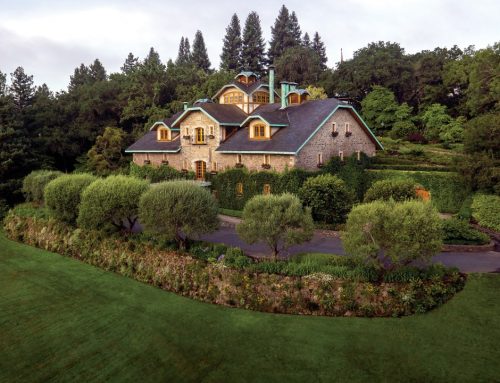
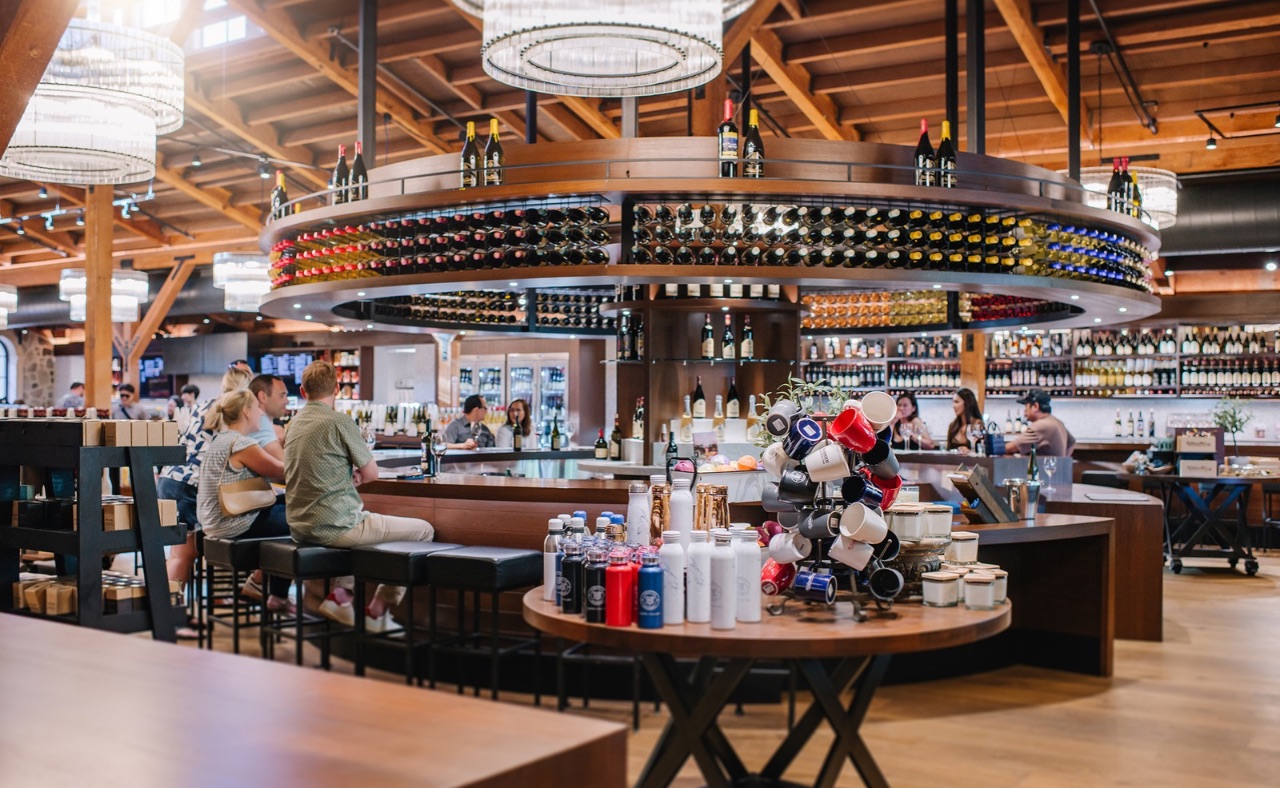
Whitehall Lane Winery in St. Helena, Napa Valley
Interview with Katie Leonardini, 2nd Generation Proprietor and Managing Member.
The first iteration of Whitehall Lane was founded in 1979, but the land itself has an agricultural history that dates back nearly two centuries. Settlers in early Napa Valley were drawn to the vineyard because of the gravelly loam soils and ideal climate, which inspired them to begin planting the first vines on what would eventually become the Whitehall Lane estate as it now exists. In the late 1970s, two brothers built the original winery with a heavy focus on Merlot and Cabernet Sauvignon, naming the newly established winery after the Whitehall Lane road along their southern border.
“Our family then purchased the property in 1993, almost on a leap of faith,” said Katie Leonardini, 2nd Generation Proprietor and Managing Member. “This was very much my dad’s style. He saw potential, trusted his instincts, and moved quickly by refreshing the barrel aging program, bringing a more scientific approach to the vineyards, and slowly expanding our estate footprint.” Today, the family farms more than 150 sustainably managed acres across eight vineyards in Napa and Sonoma counties. The winery is now in their second and third generations of family leadership, which is a great point of pride. We interview Katie to learn more.

What type of wine do you specialize in?
Katie Leonardini, Generation Proprietor and Managing Member: We are best known for our Cabernet Sauvignon, Merlot, Pinot Noir, and Sauvignon Blanc. Cabernet and Merlot have always been our backbone, they’re part of our identity, and we’ve stayed loyal to them even when trends shifted. However, our Sauvignon Blanc has gained great popularity over the last ten years or so. We blend a small lot of our estate Semillon into the Sauvignon Blanc which adds a little texture and complexity.

What makes your wine unique?
Katie Leonardini: Good question. Our primary ethos is producing wines that remain accessible while still retaining their quality. To achieve this, our wines are 100% estate grown, crafted in small lots, and made with clean, transparent winemaking practices. Everything is vegan and gluten free, including the barrels we use, which is still very rare in Napa. We farm some of the best terroir in the Rutherford and St. Helena appelations, but we’re intentional about restraint in the cellar. We don’t believe in over-manipulating wines or hiding behind excess. Balancing our top-tier vineyard sources with an intentional and minimalist approach allows us to keep that ethos consistent amongst our vintages.

Share a popular tasting experience that guests should explore.
Katie Leonardini: Well, we’d love for guests to explore all of our tasting experiences, but one of our most popular experiences is our Elevated Cabernet Tasting. It features five of our top estate Cabernets paired with a cheese accompaniment to showcase how each of our estate wines expresses itself. We try to tailor the experience to highlight the nuances of our different vineyard sites while offering a more targeted, side-by-side look at our Cabernet program.
We truly make an effort to create a relaxed and low-pressure atmosphere for our visitors. Guests can explore the wines at their own pace, regardless of if they are longtime collectors or visiting Napa for the first time. Our main goal is to make every tasting feel welcoming and unhurried.

What’s one thing you wish more people knew about your winery?
Katie Leonardini: There’s so much that I wish I could shout from the rooftops about our winery. Something pivotal I’ve noticed, though, is that Napa’s rise as a luxury wine destination has naturally influenced how some consumers view the region today. I wish people knew that Napa wine doesn’t have to be intimidating or expensive to be exceptional. Great farming, great fruit, and great hospitality doesn’t need to come with pressure or pretense.

At Whitehall Lane, we focus on welcoming guests without pressure and letting the wines speak for themselves. We believe that transparency and genuine connection matter just as much as luxury labels. If people leave feeling informed, relaxed, and excited to come back, we’ve done our job.
Our hospitality members guide our guests through the wines with their own style. Of course, they tell our story, but they are not heavily scripted. Many guests come back and ask for the same staff member because they feel they’ve made a friend or a great contact in Napa Valley that they can trust.

How did you get started in the wine industry?
Katie Leonardini: I guess the wine industry has always been a part of me. My family entered the wine world in the early 1990s after running a car-leasing business in San Francisco. Wine wasn’t part of the original plan, it was an opportunity my dad saw and believed in. My father opened a wine shop in San Francisco in the 1980’s (it’s still open!) because he loved wine.
We often tasted new wines growing up over delicious Italian meals that my mother cooked for our big family. Before we could taste the wines, my father would have me read the label and talk about what each part of the label meant. So, he made it fun and educational. Fast forward several years after college and working in the financial services industry, I joined the winery in 2005 under the guidance of my father, Tom Leonardini Sr., and learned the business from the ground up by spending time in every part of the operation.
My background in finance and education helped me bring a different perspective, particularly around long-term strategy and business development. The real inspiration, though, has always been my parents’ work ethic, especially my dad’s belief in community and building something that can weather anything.

As a second‐generation leader, how do you balance honoring your parents’ legacy with setting your own imprint on the brand?
Katie Leonardini: Being a 2nd gen leader is definitely a big responsibility. It’s a balance of preserving what has always mattered to us while bringing a modern vision to how we farm and welcome guests. The core tenants of family, hospitality, and quality will always remain, regardless of the generation that is driving it. I think what really distinguishes the second and third generations is a focus on sustainability and small-lot winemaking, as well as promoting ingredient transparency.
The 3rd generation is really focused on the winemaking part of the business. So, we’re more thoughtful about evolving the brand in ways that feel intentional rather than trend-driven. At the end of the day, every decision is grounded in respect for the foundation my parents built and a responsibility to leave the winery stronger for the next generation.

Do you remember the first time you fell in love with wine?
Katie Leonardini: Although my parents purchased the winery in 1993, I was in school and was focused on other things in my life. When I moved to Napa Valley for the first time in 2004, it changed my life. I lived in an old farmhouse in the middle of one of our newly purchased cabernet vineyards in St Helena with my three young children.
In the mornings, we would go outside and walk up and down the rows because it was our backyard. I was able to experience the one year cycle of the vines for the first time. At the same time, we could go to the winery and have the freedom to walk through the barrel room, hang out on the crush pad during harvest, etc. My first year here was really an exciting time. It was exciting to watch it all through my children’s eyes as well.

From your vantage point, what are the most important shifts you see in how wine lovers engage with a family-owned Napa brand like yours? How are you adapting Whitehall Lane’s consumer experience (visits, club membership, etc.) to meet those expectations?
Katie Leonardini: It’s not just about great wine anymore! Wine lovers today want transparency and a genuine connection to their experiences, especially when they’re walking into a family-owned winery. We’ve adapted to this by focusing on sustainable estate farming, clearly communicating what’s in our wines, and keeping our tasting room approachable and walk-in friendly. We also design our experiences to feel personal by not prioritizing hard sales and instead focusing on consistency throughout our service and team. Even as the wine industry cycles through economic pressures and changing tourism patterns, we’ve found that people still respond to authenticity and true hospitality.

How does your team approach maintaining consistency in style and quality across vintages while still allowing for innovation?
Katie Leonardini: It’s a balance, really. Our winemaking team uses small-lot fermentations, single-block vinification, and clonal specificity to maintain the character of each vineyard. At the same time, we’re not afraid to innovate.
Exploring varietals like Camminare Noir and Paseante Noir allows us to look forward without losing our sense of self. The goal is to approach winemaking very deliberately to promote the best expression of each vintage rather than forcing a uniform outcome. We rely on disciplined farming to maintain balance year after year. That structure gives us the freedom to experiment while staying true to the legacy and identity of Whitehall Lane. Lastly, after purchasing our eighth vineyard in 2019 and planting Chardonnay, we achieved our long time goal of crafting wines with 100% estate fruit, which will support our efforts to deliver quality and consistency vintage after vintage.

Do you have a favorite story about working at your winery?
Katie Leonardini: It would have to be during the 2017 fires. It seems like so long ago, and although it was a traumatic time, our team really came together. We still had to process fruit that had been harvested and some of our team members had to leave because their homes were being evacuated. We needed people to keep harvest moving along as quickly and thoughtfully as possible. We had friends step in, family members step in, and tasting room staff help out. Some many people offered to help. It really showed how we could all come together when times were challenging.