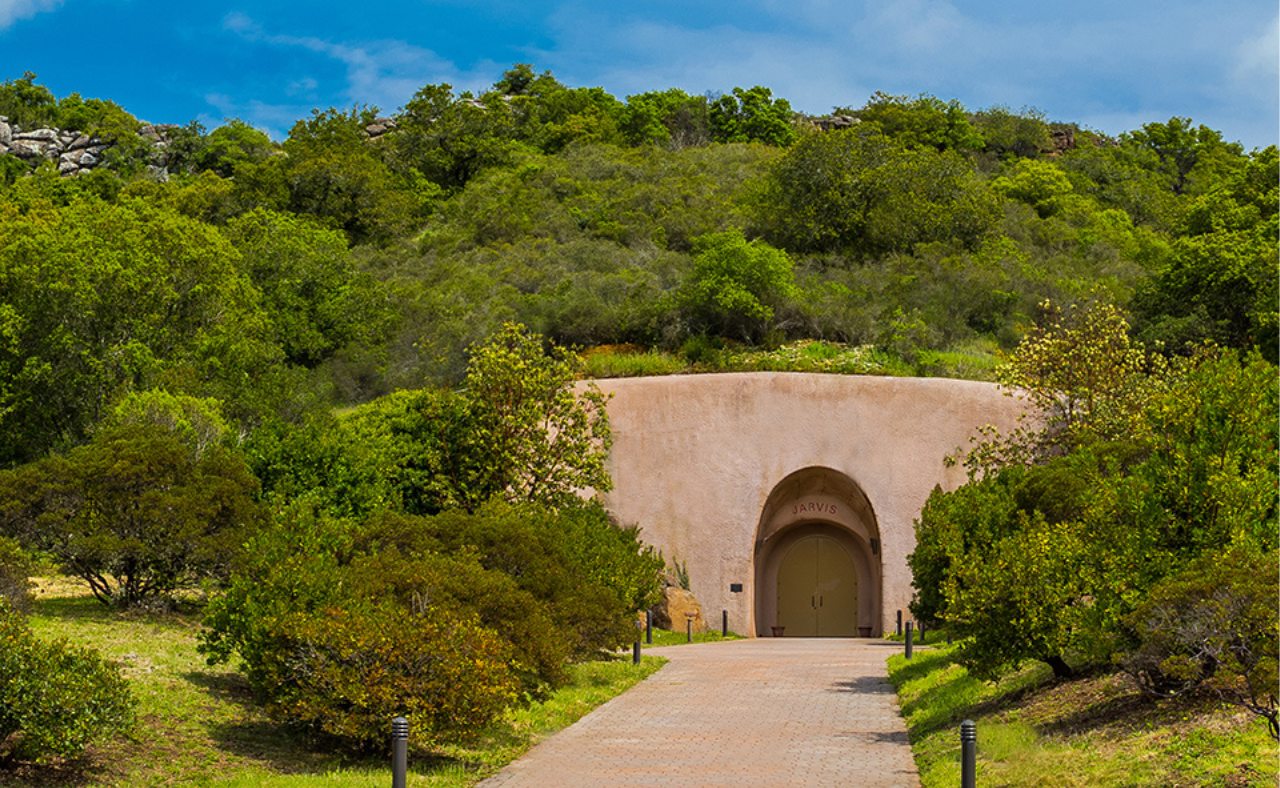
Jarvis Estate Winery in Napa
This hidden-gem winery makes exceptional long aged Cabernet Sauvignon, Cabernet Franc and Chardonnay.
You enter Jarvis Estate Winery through arched bronze doors that are set into a verdant hillside. Just to the left of the door, there’s a small plaque that says “May this cave always be the home for great wines!” It’s signed by founder William Jarvis and inaugural winemaker Dimitri Tchelistcheff.
That arched door foreshadows what’s to come: the entire winery is underground, completely contained in a series of curving caves underneath the Vaca Mountains.
The lighting is dim, the air is cool and moist and you hear the sound of flowing water in the distance. It feels like you’re entering a rarefied world unto itself.

The wines, which include Cabernet Sauvignon, Cabernet Franc, Merlot and Chardonnay, follow that same model. Crafted by winemaker Scott Morrison, they’re made entirely from estate fruit and spend extended time aging in French oak. For example, the 2014 vintage Reserve Cabernet Sauvignon was just released in October 2024. It spent three years aging in French oak and another seven years resting in the bottle. “It’s a significant amount of time waiting. Coming from this region, we do have a lot of structure in these wines and we want to release them when they’re ready,” says Will Jarvis, the winery president. “That’s something our members appreciate.”
Jarvis wines dance on the palate, displaying the perfect poise between fruit, acid and tannins that makes wines thrilling to drink. The red wines are polished and balanced with well-integrated fruit and tannins. Although Jarvis released its first vintage of wines in 1992, it’s one of those hidden gem wineries that many wine lovers are still discovering.

Tastings
Jarvis offers two tastings available only by advance appointment daily between 9 am and 5 pm at the winery. The 90-minute Vintage Tasting ($150 per person) for first-time visitors includes a tour of the caves followed by a seated tasting. The tour takes guests through the Cuve Gallery, with 12 large oak vessels from Cognac for fermenting wine. Those tanks take on new significance when you realize that French coopers (artisans who make wooden wine barrels and tanks) assembled them inside the caves.

The tour continues through other steps of the winemaking process including the barrel aging cave, a special events gallery filled with a collection of large gemstone geodes. Guests pass the waterfall before entering the Tasting Chamber for a seated tasting that includes a selection of wines paired with artisan cheeses.

Members of the Jarvis wine club, called The Circle, can also book a Founders’ Reserve Tasting. The tour is shortened to allow time for tasting from barrel as well as wines from the library and reserve collection, such as the DTR Dimitri Tchelistcheff Reserve, a 2012 vintage Cabernet Sauvignon that’s aged in two sets of new French oak barrels. This 90-minute experience is $100 per person for members and $150 per person for their guests.
The Setting
Founders William and Letitia Jarvis were so taken with the pristine natural beauty of the site in the Vaca mountains that they didn’t want to disturb it with a large winery building. The winery is off a winding mountain road in what feels like an untamed wilderness, though it’s just four miles east of downtown Napa. Passing green hills, and a pair of ponds topped with lily pads on the way to the cave’s entrance, visitors get a sense of the rustic beauty that Jarvis and his wife Letitia first appreciated here.

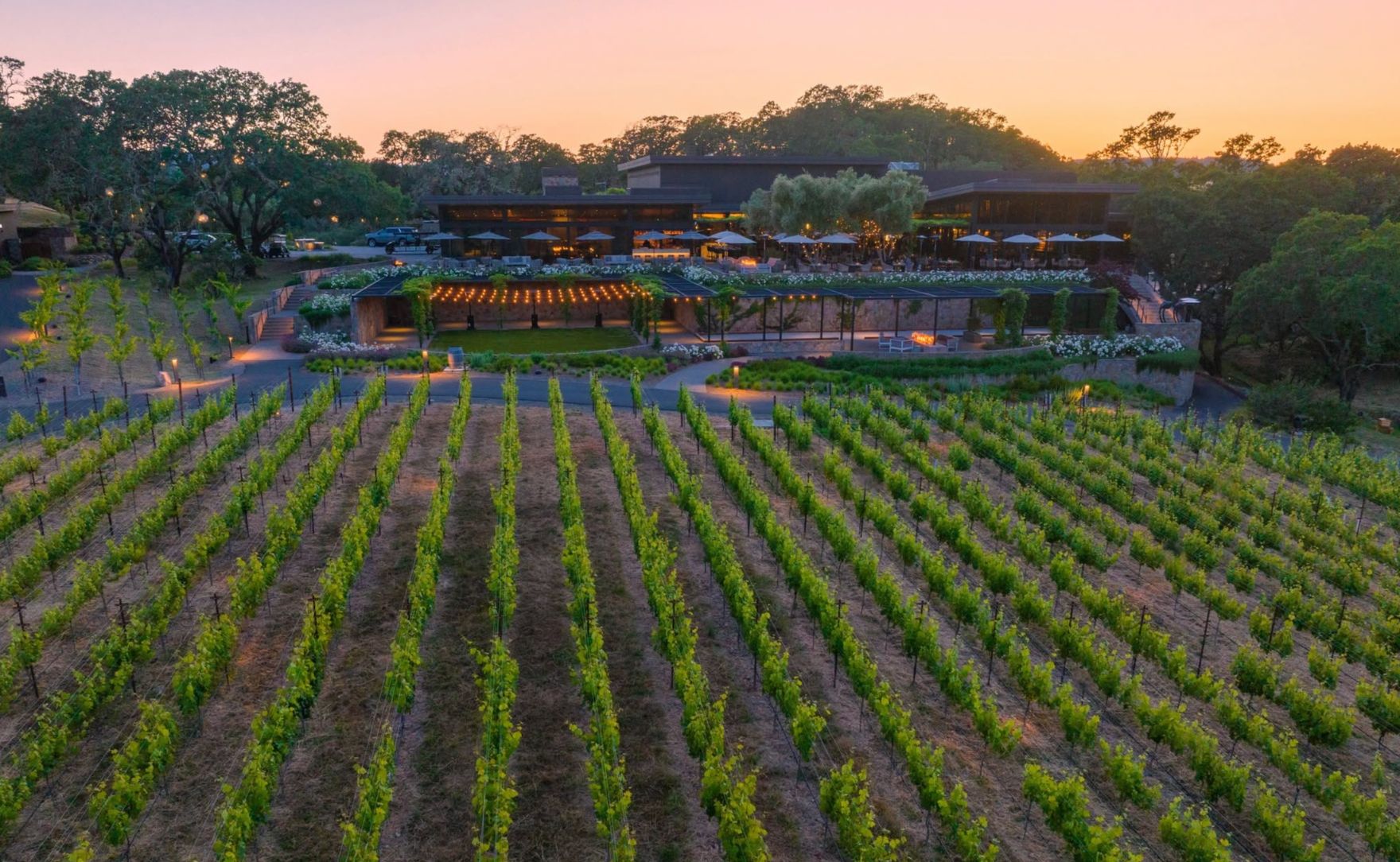
It’s a cool mountain growing region that allows grapes to ripen fully while still retaining acidity. The 37 acres of hillside estate vineyards are planted to Cabernet Sauvignon, Cabernet Franc, Merlot, Petit Verdot, Chardonnay, Tempranillo and 57 others experimental grapes such as Riesling and Nebbiolo. The soils are mainly volcanic, rocky and well-drained.
The vineyards sit at 1,000 feet elevation between Mount George and Milliken Canyon where they’re cooled by breezes from San Pablo Bay. The Jarvis vineyards tend to be several degrees cooler than the valley floor, and are often cooler than Los Carneros because of the elevation. Jarvis is just outside the Atlas Peak American Viticultural Area, so the wines carry the Napa Valley appellation even though they’re made from 100% estate fruit.

History
Jarvis was a telecommunications pioneer and Silicon Valley co-founder of a company called Wiltron when he and his wife Letitia decided to buy land in Napa Valley for a weekend getaway. The couple had spent time living and traveling in Europe, and were fond of red Bordeaux blends and white Burgundy from Montrachet. Owning the property led to planting vineyards in 1986 and designing a winery that was completed in 1995.
A college geology course inspired Jarvis to build a state of the art winery entirely underground. You’ll find several subterranean wineries around the world today, including the LEED Platinum Castillo Perelada on Spain’s Costa Brava. But back in the mid-1980s, the decision was a bold and somewhat unusual move.
Jarvis worked with Gregg Korbin PhD, a geotechnical consultant who has also worked on tunnels for BART, and relied on a supercomputer at University of California at Berkeley to design the series of parabolic arches that comprise the 45,000 square foot winery. The same machines that were used to dig the underwater Channel Tunnel connecting UK and France were used to create the tunnels. The symmetrical parabolic arches are pitched just so with a 0 degree angle at the top, so they’re perfectly stable without any need for support.

Those arches are echoed in the shape of the doors crafted from fine bronze adorned with a grapevine relief as well as the many brass wall sconces that light the tunnels, casting arched shadows on the walls. The minerals in the mountain gave it a natural blush pink hue that was incorporated into the decor.
But for some, the most memorable feature of the Jarvis winery is the waterfall that cascades down a rock surface.
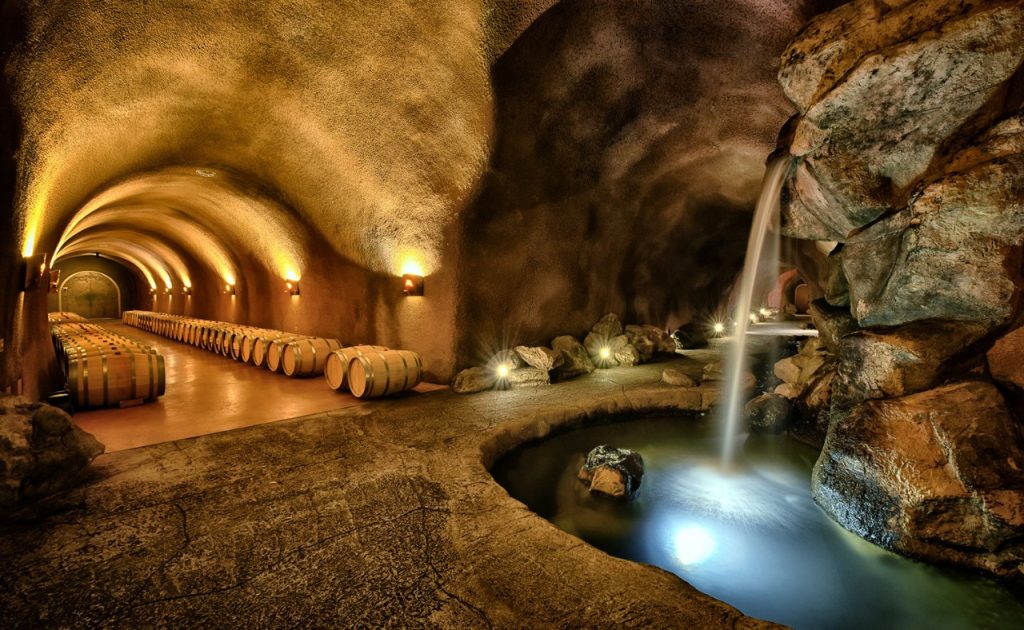
As they were digging, workers hit a small natural spring. They considered plugging it, but the engineer advised finding a way to incorporate it in the design because water will flow where it wants. They diverted it, creating a series of canals that are fed by the waterfall. The added humidity helps slow evaporation from the wine barrels while also adding a dimension of sound to the experience.